Artificial Intelligence is no longer a futuristic concept; it's a present-day competitive advantage. But successful AI adoption isn't about buying the latest tool; it's about organizational readiness. Rushing into AI with a weak foundation leads to wasted investment, frustrated teams, and minimal impact. The crucial question isn't if you should adopt AI, but when. Before diving into complex projects, gaining a solid understanding of the core principles of Artificial Intelligence itself is paramount. This foundational knowledge ensures that strategic decisions are informed and realistic.
This guide moves beyond the hype and outlines the nine definitive signs your company is ready for AI. We will explore the concrete indicators that separate a company poised for transformation from one destined for a pilot project that goes nowhere. You will learn to identify the strategic, technical, and cultural groundwork necessary to turn AI from a buzzword into a scalable revenue engine. For B2B growth leaders and executives, this isn't just a checklist; it's a blueprint for de-risking your investment and maximizing your return. We will provide practical examples, key takeaways, and actionable next steps for each sign, ensuring you can confidently assess your organization's preparedness and build a clear path forward.
1. Clear Business Objectives and ROI Metrics
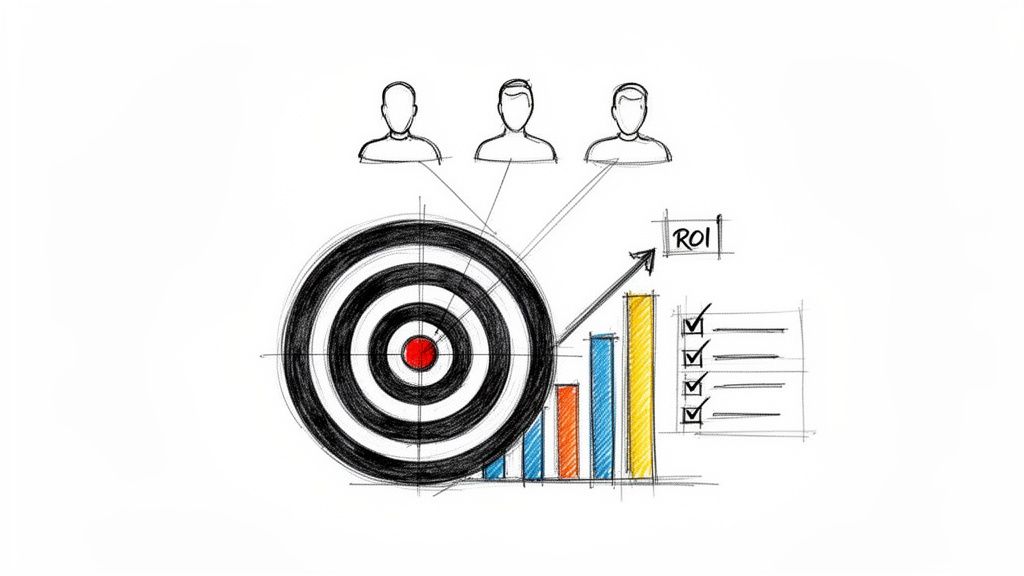
The most crucial sign your company is ready for AI isn't the technology you have, but the clarity of the problems you want to solve. Organizations prepared for successful AI adoption have moved beyond vague goals like "improving efficiency." Instead, they have identified specific, high-impact business challenges and established clear, measurable outcomes for success. This foundational step ensures AI is a strategic tool, not a speculative expense.
Readiness here means stakeholders are aligned on the expected return on investment (ROI) and have documented baseline metrics before implementation. Without knowing your current state, you can't accurately measure the impact of any new initiative.
Key Takeaway
Leading with a specific business problem, not a specific AI technology, is the number one indicator of AI readiness. This problem-first approach guarantees that any AI solution is directly tied to tangible business value and strategic goals.
Practical Examples
- Pest-Control Brand: Targeted a 69% improvement in lead-to-appointment time by automating scheduling.
- Community Bank: Aimed to reduce Cost Per Lead (CPL) for new accounts, resulting in $5.9M in new deposits.
- SaaS Company: Set a goal to double Marketing Qualified Leads (MQLs) using AI-powered content and outreach.
- Manufacturer: Focused on reducing manual labor hours in quality control, achieving an average 58% reduction.
Impact Opportunity
Starting with clear objectives transforms AI from a cost center into a predictable growth engine. By defining success upfront, you create a direct line of sight between your investment and measurable outcomes like increased revenue, reduced operational costs, and enhanced customer satisfaction. This clarity also accelerates buy-in from leadership and cross-functional teams.
Actionable Next Steps
- Identify Your Most Pressing Problem: Don't start with the AI tool. Start with the biggest bottleneck in your growth engine, whether it's sales cycle length, customer churn, or lead qualification.
- Establish Baseline Metrics: Document your current performance. What is your average CPL? How many hours are spent on manual data entry? This is non-negotiable.
- Assign an Executive Sponsor: Ensure a leader is responsible for tracking progress and holding the initiative accountable to its ROI targets.
- Validate Your Metrics: Use an external perspective to pressure-test your goals. A complimentary Prometheus Agency Growth Audit can help quantify your current state and refine target outcomes before you invest.
2. High-Quality, Well-Organized Data Infrastructure
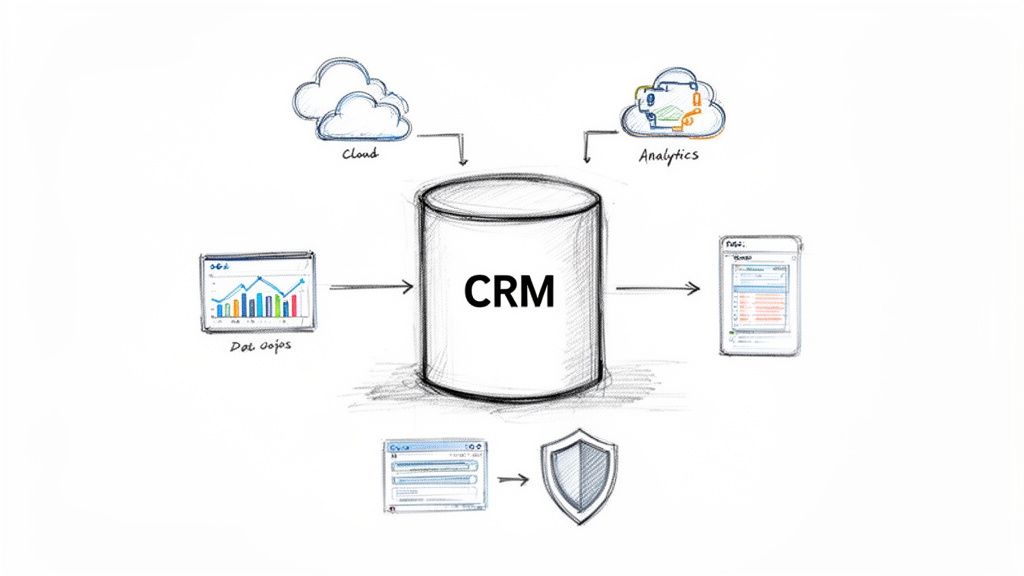
An AI model is only as intelligent as the data it learns from. Therefore, one of the most vital signs your company is ready for AI is having a clean, organized, and accessible data infrastructure. Companies that have already invested in data governance, CRM standardization, and consistent data entry protocols have a massive head start. AI relies on this foundation to generate reliable insights and drive accurate automation.
Poor data quality, such as duplicate records, inconsistent formatting, or siloed information, directly undermines any AI initiative. It’s the classic "garbage in, garbage out" principle. A mature data ecosystem ensures that AI tools are not just guessing but are operating on a verifiable source of truth, making their outputs trustworthy and actionable.
Key Takeaway
A disciplined approach to data management is a non-negotiable prerequisite for successful AI adoption. Without a high-quality data foundation, any investment in AI technology will yield disappointing results and erode trust in the initiative.
Practical Examples
- SaaS Company: Consolidated disparate customer data from multiple regions to enable precise AI-driven account-based marketing (ABM).
- Manufacturer: Standardized product and customer codes across all facilities, creating a clean dataset for predictive maintenance AI.
- Pest-Control Franchise: Unified booking, service, and billing data into a single CRM, allowing an AI chatbot to handle customer inquiries accurately.
- Community Bank: Integrated separate loan and deposit systems, providing a 360-degree customer view for personalized marketing AI.
Impact Opportunity
Investing in data infrastructure before AI implementation dramatically de-risks the project and accelerates time-to-value. Clean, centralized data allows AI models to be trained faster and produce more accurate predictions, leading to better decision-making, more effective marketing campaigns, and a more efficient go-to-market engine. It turns data from a simple record into a strategic asset.
Actionable Next Steps
- Conduct a Data Audit: Before you even evaluate AI vendors, assess the quality and accessibility of your core data sets in your CRM and other critical systems.
- Establish a Single Source of Truth: Mandate that all customer-facing teams operate from a central CRM. Eliminate unsanctioned spreadsheets and databases.
- Implement Data Governance: Create and enforce clear data entry standards and processes. Provide training and establish accountability for data cleanliness.
- Assess Your AI Readiness: A comprehensive analysis can reveal hidden data gaps. You can benchmark your organization's readiness by exploring your AI Quotient.
3. Executive Alignment and AI Governance Structure
A powerful AI tool without clear leadership is like a ship without a captain; it has immense potential but no direction. Companies genuinely ready for AI have established a formal governance structure to steer their initiatives. This means key executives are aligned, and there is a clear framework for making decisions, allocating resources, and resolving conflicts.
This structure prevents promising AI projects from stalling due to departmental silos, competing priorities, or a lack of authority. True readiness is demonstrated when an organization designates a steering committee or a high-level executive sponsor to champion the transformation, remove roadblocks, and ensure accountability from pilot to full-scale deployment.
Key Takeaway
A dedicated governance framework, led by an enabled executive sponsor, is one of the most critical signs your company is ready for AI. This structure provides the authority and cross-functional alignment needed to overcome internal resistance and drive initiatives to completion.
Practical Examples
- Fortune 500 Manufacturer: Established an AI council with VP-level representation from operations, IT, and sales to oversee all automation projects.
- Mid-Market SaaS: Appointed the Chief Revenue Officer as the executive sponsor for AI transformation, giving them authority over the CRM-AI integration.
- Community Bank: Created a digital innovation team that reports directly to the CEO, tasked with identifying and implementing AI-driven growth opportunities.
- Growth-Stage Company: Assigned the Chief Operating Officer to oversee the entire CRM and AI integration to ensure operational efficiency goals were met.
Impact Opportunity
Strong governance turns AI adoption from a fragmented, tactical effort into a cohesive, strategic imperative. It ensures that investments are directed toward the highest-impact areas, accelerates decision-making, and creates clear lines of accountability. This top-down support signals the importance of the initiative to the entire organization, building broader buy-in and smoother implementation.
Actionable Next Steps
- Designate a Single Executive Sponsor: Choose a leader with the authority to allocate budget, assign personnel, and make final decisions.
- Form a Steering Committee: Include leaders from IT, sales, marketing, and operations to ensure cross-functional perspectives are represented.
- Create a Simple Charter: Draft a one-page document outlining the committee's roles, responsibilities, decision-making process, and primary objectives.
- Establish a Cadence for Meetings: Schedule monthly or bi-weekly governance meetings with a fixed agenda focused on progress, roadblocks, and next steps.
4. Technical Foundation and Systems Integration Capability
AI tools don't operate in a vacuum; they create value by connecting to and enhancing your existing business systems. A clear sign your company is ready for AI is having a modern technical foundation that supports integrations, APIs, and cloud services. Companies that can seamlessly connect a new AI solution to their CRM, marketing automation platform, and analytics tools are positioned for rapid success. Conversely, those operating on disconnected, legacy systems will face significant technical hurdles and prolonged timelines.
The ability to integrate is not just a technical detail; it's a strategic enabler. Without it, even the most powerful AI remains siloed and unable to access the data it needs to generate meaningful business impact. A flexible, API-first tech stack is a fundamental prerequisite for a successful AI transformation.
Key Takeaway
A modern, integrated tech stack is the central nervous system for any AI initiative. The capability to connect data sources and business applications via APIs is a critical indicator of a company’s ability to deploy and scale AI solutions effectively and efficiently.
Practical Examples
- SaaS Company: used Salesforce APIs to feed real-time user data into a custom AI lead-scoring model.
- Manufacturer: Connected its ERP, CRM, and marketing automation systems to provide a unified data source for an AI-driven predictive maintenance tool.
- Pest-Control Franchise: Used Zapier to connect its field service software to its central CRM, enabling AI-powered customer communication.
- Community Bank: Integrated a modern CRM with a legacy core banking system using middleware, allowing AI to personalize customer offers.
Impact Opportunity
A strong technical foundation dramatically reduces AI implementation time and costs. It allows for faster deployment of pilot programs and quicker scaling of successful initiatives. This agility enables your organization to capitalize on AI-driven insights faster, creating a significant competitive advantage through improved operational efficiency, enhanced decision-making, and superior customer experiences.
Actionable Next Steps
- Audit Your Tech Stack: Map your current systems (CRM, ERP, marketing tools) and identify key integration points and potential gaps.
- Prioritize API-Ready Solutions: When evaluating new software, make strong API support a non-negotiable requirement. Plan a roadmap to phase out legacy systems that lack integration capabilities.
- Explore Middleware Platforms: Investigate Integration Platform as a Service (iPaaS) solutions like Zapier or Workato to connect systems without extensive custom development.
- Align with an Expert Partner: An AI enablement partner can assess your current infrastructure and develop a clear integration strategy, ensuring your technical foundation is prepared for AI adoption.
5. Sufficient Budget and Resource Commitment
Successful AI adoption is an investment, not a line item expense pulled from an existing IT budget. A key sign your company is ready for AI is a realistic, dedicated financial commitment that extends beyond the initial software purchase. Organizations poised for transformation understand that true ROI requires funding for implementation, data preparation, team training, and ongoing optimization.
Readiness means leadership has moved past a "shoestring budget" mindset and has formally allocated funds and personnel. This commitment signals a strategic priority, ensuring the initiative has the resources to overcome inevitable hurdles and achieve its long-term goals. Without this, even the most promising AI projects stall due to a lack of fuel.
Key Takeaway
A dedicated, multi-faceted budget and the allocation of full-time team members are non-negotiable indicators of AI readiness. This complete approach to resourcing prevents project failure and ensures AI initiatives are treated as critical business transformations, not as secondary IT experiments.
Practical Examples
- Mid-Market Manufacturer: Allocated over $500,000 for a comprehensive CRM and AI implementation to be rolled out over 18 months.
- SaaS Company: Committed three full-time employees (FTEs) specifically to shepherd its go-to-market AI transformation.
- Community Bank: Created separate budget lines for consulting, software licensing, and employee training to ensure full cost transparency.
- Growth-Stage Company: Dedicated 20% of its operations team’s time to oversee the adoption and optimization of new AI tools.
Impact Opportunity
Properly funding an AI initiative de-risks the investment and dramatically increases the probability of success. It allows your organization to hire the right partners, train your team effectively, and build a scalable infrastructure. This transforms AI from a high-risk gamble into a well-managed strategic asset that can predictably drive efficiency, revenue growth, and competitive advantage.
Actionable Next Steps
- Build a Comprehensive Budget: Itemize all potential costs, including software, implementation services, internal staff time, and essential change management training.
- Allocate a Contingency Fund: Set aside 15-20% of the total budget to cover unforeseen challenges and scope adjustments. This is standard practice for major technology projects.
- Secure Executive Buy-In: Present the total cost of ownership to leadership upfront to gain full financial and strategic alignment before the project begins.
- Define Your Resource Plan: Identify and assign the internal team members who will lead the project, ensuring their existing responsibilities are managed to allow for dedicated focus.
6. Organizational Change Management Readiness
A brilliant AI model that nobody uses is a failure. One of the most overlooked yet critical signs your company is ready for AI is its capacity to manage organizational change. True readiness means leadership acknowledges that AI implementation is not just a technology project; it is a people project that will alter roles, workflows, and company culture.
Companies prepared for this transition have a proactive plan for the human side of the equation. They have assessed their track record with past transformations, secured leadership commitment to support affected employees, and developed a clear communication strategy. Ignoring the change management component is the fastest way to ensure a technically sound AI solution gathers dust.
Key Takeaway
AI success hinges on user adoption, which is a direct result of effective change management. A company's readiness to guide its people through transition, address fears, and provide new skills is as important as the technology itself.
Practical Examples
- SaaS Company: Retrained Sales Development Reps as "AI-assisted strategists" when AI automated lead qualification, focusing their efforts on high-value conversations.
- Community Bank: Redeployed branch staff from manual approval tasks to proactive, high-touch relationship-building roles after AI simplified the process.
- Pest-Control Franchise: Implemented a comprehensive training program to help dispatchers master new AI scheduling tool workflows, turning them into system experts.
- Manufacturer: Upskilled supply chain analysts to interpret and act on complex AI-driven demand forecasts, shifting them from data entry to strategic decision-making.
Impact Opportunity
Proactive change management de-risks your AI investment by maximizing adoption and minimizing internal resistance. By addressing job security concerns and demonstrating a commitment to employee growth, you build a culture of innovation and trust. This ensures the full value of the AI tool is realized, turning potential disruption into a competitive advantage.
Actionable Next Steps
- Create a Communication Plan: Before implementation, draft a clear plan to communicate the "why" behind the AI initiative, focusing on benefits for both the company and employees.
- Identify and enable Champions: Find enthusiastic employees in each department to act as advocates, provide feedback, and support their peers during the transition.
- Map Out New Roles and Skills: Proactively identify which tasks will be automated and what new skills employees will need. Develop a retraining and upskilling program.
- Plan for Phased Rollout: Involve frontline employees in redesigning processes and use a phased approach to gather feedback, celebrate early wins, and build momentum for wider adoption.
7. Ability to Identify and Prioritize High-Impact Use Cases
A crucial sign your company is ready for AI is the ability to look past broad, ambitious goals and pinpoint specific, high-impact operational problems. AI-ready organizations have a deep understanding of their internal workflows, customer journey friction points, and revenue-impacting bottlenecks. They can articulate exactly where AI will be applied and what specific outcome it will drive, moving beyond vague initiatives like "AI transformation."
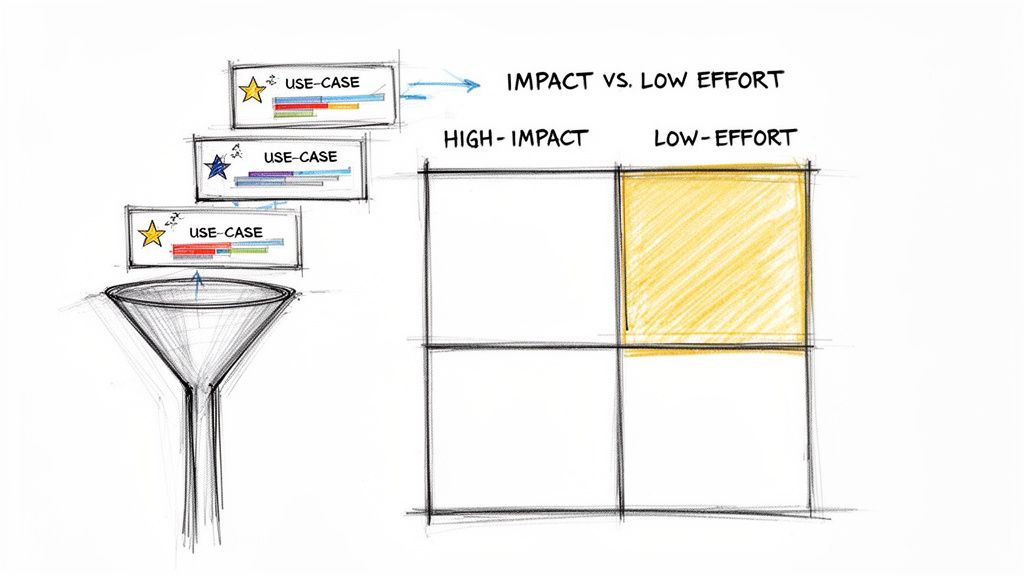
This clarity allows them to prioritize initiatives effectively, often using an impact-versus-effort matrix to select initial projects. Starting with a well-defined use case, such as "reduce lead-to-appointment time" or "improve sales qualification accuracy," ensures a faster path to demonstrable ROI and builds momentum for future, more complex AI integrations.
Key Takeaway
The ability to identify and prioritize specific use cases is a stronger indicator of AI readiness than having advanced technical infrastructure. It demonstrates a strategic, business-first mindset that connects AI investment directly to measurable operational improvements and financial gains.
Practical Examples
- Pest-Control Brand: Identified lead-to-appointment time as its top priority use case, leading to a 69% improvement.
- Community Bank: Prioritized Cost Per Lead (CPL) reduction for new deposits over a general "marketing AI" project.
- SaaS Company: Focused narrowly on qualifying leads for Account-Based Marketing (ABM) as its pilot initiative.
- Manufacturer: Tackled the high-volume, high-error problem of manual order entry before pursuing broader analytics.
Impact Opportunity
Prioritizing use cases de-risks AI adoption by focusing resources on a single, winnable battle. A successful pilot builds organizational confidence, proves tangible value to leadership, and creates a repeatable framework for future AI projects. This approach turns a potentially overwhelming transformation into a series of manageable, high-impact steps. When assessing your ability to identify and prioritize AI initiatives, it's vital to consider specific technologies and their applications, such as understanding how Large Language Models (LLMs) drive high-impact AI use cases.
Actionable Next Steps
- Map Your Value Chain: Interview department heads in sales, operations, and customer service to identify their top three biggest time sinks or bottlenecks.
- Quantify the Pain: Assign a cost (in hours or dollars) to each identified problem. This helps clarify the potential ROI.
- Rank Use Cases: Plot each potential use case on an impact vs. effort grid to find the "quick wins" that offer high value with lower complexity.
- Launch a Focused Pilot: Select one high-impact, achievable use case and define its success metrics. For B2B companies, this often involves tackling an issue in the sales funnel. Learn more about how to apply this with AI-powered lead generation.
8. Internal Champions and Adoption Leaders
Successful AI adoption is less about top-down mandates and more about grassroots enthusiasm and peer-to-peer influence. The most prepared organizations have identified internal champions who can bridge the gap between technology and business reality. These individuals are not necessarily managers; they are respected team members who understand daily workflows and can translate the potential of AI into practical, team-specific benefits.
These champions act as evangelists, first-line support, and a crucial feedback loop for the implementation team. Their involvement reduces friction, demystifies the technology for hesitant colleagues, and ensures the AI tool is adapted to solve real-world problems, not just theoretical ones. Having these advocates in place is a clear sign your company is ready for AI because it shows a commitment to the human side of technological change.
Key Takeaway
Technology alone cannot drive change. True AI readiness is demonstrated by an organization's investment in enabling credible internal advocates who can champion new tools, train their peers, and drive sustainable adoption from within.
Practical Examples
- SaaS Company: A top-performing sales manager championed an AI lead-scoring tool, demonstrating how it helped her team focus on the most promising deals.
- Community Bank: A respected branch manager was designated to lead the adoption of a new AI-powered loan approval system, building trust among loan officers.
- Manufacturing Firm: A supply chain supervisor was enabled to lead the rollout of an AI recommendation engine, tailoring it to optimize inventory management on the factory floor.
- Pest-Control Franchise: Area managers were trained as champions to lead the adoption of an automated scheduling tool across their territories.
Impact Opportunity
Nurturing internal champions drastically accelerates the time-to-value for any AI investment. It transforms a potentially disruptive rollout into a collaborative effort, minimizing resistance and maximizing user engagement. This approach builds a culture of continuous improvement and ensures the AI solution evolves based on direct user feedback, delivering compounding returns long after the initial implementation.
Actionable Next Steps
- Identify Potential Champions Early: Look for individuals with both technical aptitude and high peer credibility during the project planning phase, not during the rollout.
- Provide Exclusive Training: Give champions early access and hands-on training so they become confident experts before the wider deployment.
- enable Them to Customize: Allow champions the flexibility to help adapt AI workflows to meet the specific needs and nuances of their teams.
- Create a Champion Network: Establish a formal or informal group for champions to share best practices, solve common challenges, and learn from each other.
9. Commitment to Continuous Learning and Optimization
One of the most telling signs your company is ready for AI is a culture that views technology as a living system, not a one-time project. AI systems are not "set-it-and-forget-it" tools; their value compounds over time through constant monitoring, feedback, and refinement. Companies poised for success have already embedded principles of continuous improvement into their operational DNA, understanding that the initial launch is just the starting line.
This readiness manifests as a commitment to treating AI models like any other high-performing team member: one that requires regular performance reviews, new data to learn from, and updated goals. This mindset shifts AI from a static expense to a dynamic, evolving asset that adapts to changing market conditions and business needs.
Key Takeaway
A true indicator of AI readiness is when an organization has a documented process for ongoing optimization. This involves dedicated resources and a structured governance model to monitor performance, gather user feedback, and continuously refine AI systems to maximize their impact.
Practical Examples
- SaaS Company: Optimizes its AI lead-scoring model weekly by analyzing which predicted leads actually converted, continuously improving sales efficiency.
- Pest-Control Franchise: Reviews weekly dispatch and appointment data to refine its AI-powered scheduling engine, reducing travel time and improving technician utilization.
- Community Bank: A/B tests different AI-driven marketing messages and channel allocations to constantly lower its Cost Per Lead (CPL) for new accounts.
- Manufacturer: Refines its quality control AI by feeding it data on production outcomes, making its defect detection more accurate over time.
Impact Opportunity
Adopting a continuous optimization model ensures your AI investment delivers compounding returns. Instead of its value decaying, the system becomes smarter, more efficient, and more aligned with your business objectives each month. This iterative approach de-risks the investment by ensuring the AI consistently delivers against its intended ROI and uncovers new opportunities for growth.
Actionable Next Steps
- Build Monitoring into the Initial Plan: From day one, define the key performance indicators (KPIs) for your AI system and establish how they will be tracked.
- Schedule Regular Review Cadences: Book recurring weekly or bi-weekly meetings with key stakeholders to review AI performance against its baseline metrics.
- Establish a Feedback Loop: Create a simple, formal process for end-users to report issues, provide feedback, and suggest improvements for the AI tool.
- Prototype and Test Changes: Use A/B testing or pilot programs to validate any proposed improvements before rolling them out across the entire organization.
9-Point AI Readiness Comparison
| Readiness factor | Implementation complexity | Resource requirements | Expected outcomes | Ideal use cases | Key advantages |
|---|---|---|---|---|---|
| Clear Business Objectives and ROI Metrics | Low–Medium (strategy & alignment work) | Executive time, analytics to establish baselines | Measurable ROI, prioritized objectives | Revenue-focused pilots (lead gen, sales efficiency) | Secures buy-in; easier success measurement |
| High-Quality, Well-Organized Data Infrastructure | High (data cleansing, governance) | Data engineering, tooling, ongoing governance | More accurate models; faster insights | Personalization, predictive analytics, reporting | Reliable inputs; reduces remediation effort |
| Executive Alignment and AI Governance Structure | Medium (policy & roles definition) | Executive sponsors, governance bodies, meeting cadence | Faster decision-making; accountability | Enterprise or cross-functional AI programs | Removes bottlenecks; sustained sponsorship |
| Technical Foundation and Systems Integration Capability | High (integration, platform work) | IT skills, APIs, cloud, middleware | Seamless data flow; shorter deployment times | API-driven automation, real-time use cases | Scalability; lower long-term TCO |
| Sufficient Budget and Resource Commitment | Low–Medium (financial planning) | Dedicated budget, FTEs, training, contingency | Realistic timelines; quality implementations | Multi-phase transformations, scaling pilots | Enables full delivery; reduces scope creep |
| Organizational Change Management Readiness | Medium–High (people & process work) | Change team, training programs, communications | Higher adoption; reduced resistance | Role shifts, process automation, redeployment | Sustains adoption; protects morale |
| Ability to Identify and Prioritize High-Impact Use Cases | Low–Medium (analysis & scoping) | Business analysts, stakeholder workshops | Faster ROI via focused pilots | Lead-to-appointment, qualification, cost reduction | Focuses effort on highest ROI; quicker wins |
| Internal Champions and Adoption Leaders | Low–Medium (selection & enablement) | Trained departmental champions, time allocation | Faster rollout; peer-led troubleshooting | Department rollouts, user-facing tools | Improves adoption speed; builds internal capability |
| Commitment to Continuous Learning and Optimization | Medium (ongoing monitoring & testing) | Monitoring tools, optimization team, testing frameworks | Sustained performance improvements; drift detection | Model tuning, A/B tests, iterative feature rollout | Keeps ROI growing; adapts to changing data/environment |
From Ready to Revenue: Building Your AI Roadmap
Recognizing the key indicators we have explored is a significant milestone. If your organization demonstrates a strong foundation across these nine areas, from clear business objectives to a culture of continuous learning, you are not just prepared for AI, you are positioned to lead with it. These are the definitive signs your company is ready for AI, signaling a shift from hypothetical discussions to tangible, revenue-generating implementations.
The journey does not end with a readiness checklist. True transformation begins when you translate these foundational strengths into a strategic, prioritized, and actionable roadmap. This involves moving beyond recognizing your capabilities to actively deploying them against your most pressing business challenges and lucrative opportunities. The presence of high-quality data, executive alignment, and technical infrastructure means you have the raw materials; the next step is to architect your AI-driven future.
Key Takeaways from Your AI Readiness Assessment
To distill this down, your next steps should be guided by three core principles derived from the signs of readiness:
- Validate Before You Build: Your ability to define ROI metrics (Sign #1) and identify high-impact use cases (Sign #7) is your most valuable asset. Before a single algorithm is deployed, you must have a clear, quantifiable business case that aligns with strategic goals. This ensures your initial AI projects deliver measurable wins, building momentum for broader adoption.
- Integrate, Don't Isolate: AI is not a standalone tool, it is a connective tissue. Your readiness in technical foundations (Sign #4) and data infrastructure (Sign #2) allows you to weave AI into existing workflows, not bolt it on as an afterthought. This integration is critical for creating a seamless system that enhances, rather than disrupts, your core operations.
- enable People, Not Just Platforms: The most sophisticated AI model is ineffective without human ingenuity to guide it. Your internal champions (Sign #8) and commitment to change management (Sign #6) are the catalysts that turn AI potential into performance. Investing in your team’s upskilling and building a data-driven culture ensures that technology adoption is both sustainable and scalable.
Mastering these concepts is the difference between an expensive AI experiment and a durable competitive advantage. By methodically building on these signs of readiness, you de-risk your investment and accelerate your time-to-value. You move from simply having the right ingredients to executing a recipe for intelligent growth, turning your operational strengths into a powerful engine for market leadership. The time for hesitation has passed. If you see your company reflected in these signs, your mandate is clear: it is time to build.
Ready to turn readiness into results? A complimentary Growth Audit and AI strategy session with Prometheus Agency can help you validate your internal assessment, quantify your highest-impact opportunities, and build a prioritized AI roadmap. Book your session today and take the definitive next step in your AI transformation journey.