Improving customer lifetime value means playing the long game. Instead of focusing on the next sale, you build strategies that encourage customers to stick around, buy more frequently, and spend more over their entire relationship with your brand.
This isn't just a minor tweak—it's a fundamental shift from chasing short-term wins to building long-term, sustainable growth. It’s how you turn a one-time buyer into a loyal fan who comes back again and again.
Why Improving Customer Lifetime Value Is Your Real Growth Engine
In the endless race for new leads, it's easy to forget about the goldmine you're already sitting on: your existing customers. While bringing in new business is always part of the plan, real, sustainable growth comes from unlocking the full potential of the people who've already chosen you.
Improving Customer Lifetime Value (CLV) isn't just another metric to stick on a dashboard. It’s the strategic core of a healthy, profitable business.
When you start focusing on CLV, your entire perspective shifts. You stop thinking transactionally and start building real, durable relationships. It's about mapping out the entire customer journey and finding those moments where you can add genuine value—which, in turn, naturally increases what they spend with you over time.
The Strategic Shift From Acquisition To Retention
Constantly chasing new customers is expensive. Customer acquisition costs (CAC) pile up fast, from marketing spend and sales commissions to onboarding resources. On the other hand, keeping an existing customer happy is almost always cheaper. Prioritizing CLV automatically puts retention front and center, focusing your energy on the audience most likely to deliver consistent revenue.
This simple shift pays off in a few powerful ways:
- Higher Profitability: Loyal customers tend to spend more and are often less sensitive to price. They already trust you, making them more open to higher-margin products or services.
- Predictable Revenue: A solid base of high-CLV customers creates a stable, predictable income stream. This makes financial forecasting much less stressful.
- The Best Kind of Marketing: Happy, long-term customers become your most powerful advocates, sending new business your way for free.
Calculating Your Customer Lifetime Value
Before you can improve CLV, you have to measure it. There are a couple of ways to do this, and each one gives you a different piece of the puzzle. Understanding both is key to getting a clear picture of your business's health. For a deeper dive into why this metric is such a game-changer, check out these strategies for increasing customer lifetime value.
When it comes to the actual calculation, you're generally looking at two models: one that looks back and one that looks forward.
Historical vs Predictive CLV Models
| Attribute | Historical CLV | Predictive CLV |
|---|---|---|
| What It Is | A simple sum of all past profits from a customer. | A forecast of the total revenue a customer will generate in the future. |
| Data Needed | Past transaction history. | Purchase history, browsing behavior, and demographic data. |
| Best For | Getting a quick, retrospective look at customer value. | Proactive marketing, personalization, and high-value segment identification. |
| Complexity | Low. Easy to calculate. | High. Often requires statistical models or machine learning. |
| Strategic Use | Reporting on past performance and identifying already-valuable customers. | Driving future-focused retention and expansion strategies. |
While historical CLV is useful for a quick snapshot, predictive CLV is where the real strategic power lies. It lets you get ahead of the game.
Practical Example: A subscription box company uses historical CLV to see that customers who bought during a Black Friday sale have a 20% lower lifetime value. They use predictive CLV to identify new subscribers who exhibit similar browsing behavior to their most loyal customers and target them with a specialized onboarding campaign.
This focus on retention isn't just a trend; it's a global priority. The loyalty management market is on track to grow from $15.19 billion in 2025 to $41.21 billion by 2032, driven by digital tools and AI-powered personalization. The numbers back it up: repeat customers can spend 67% more in their third year with a business than they did in their first six months. That’s a massive amount of value waiting to be unlocked.
Key Takeaways: CLV is a direct measure of your business's long-term health. Shifting focus from acquisition to retention lowers costs and creates predictable revenue. While historical CLV is good for reporting, predictive CLV is essential for proactive, future-focused growth strategies.
Impact Opportunity: Once you establish a data-backed baseline for CLV, you can measure the true ROI of your retention and loyalty efforts. This transforms marketing from a cost center into a predictable profit engine.
Pinpointing Your Key CLV Drivers and Blockers
Once you’ve calculated your Customer Lifetime Value, the real work begins. The number itself is just a starting point. The real value comes from digging into the "why" behind it—transforming that static metric into a clear roadmap for growth.
This is where you play detective. You need to dive deep into your customer data to find the exact touchpoints, actions, and experiences that turn a casual buyer into a loyal advocate or send them running for the door. Think of it as a CLV audit: a systematic hunt for the make-or-break moments in the customer journey.
Conducting Your CLV Audit
The goal here is to get past the averages and find the specific behaviors that separate your best customers from everyone else. Start looking for patterns. Does a super-smooth onboarding process correlate with a higher CLV? What about the speed of your customer support?
Practical Example: A SaaS company discovers that customers who integrate their calendar within the first 48 hours of signing up have a 3x higher CLV and are 50% less likely to churn in the first six months. This insight allows them to re-engineer their entire onboarding process to guide every new user toward this "magic moment" immediately.
A CLV audit is about finding those specific, repeatable actions that signal a customer is getting real value. Once you find them, your mission is to get every new customer to that point as fast as possible.
Building a Dashboard to Track Key Drivers
To make this kind of analysis a regular habit, you need a single source of truth. A simple, focused dashboard is your best friend here. You can start with just a few core metrics that directly feed into your overall CLV.
Your dashboard should give you an at-a-glance view of metrics like:
- Repeat Purchase Rate: Are customers coming back for more? Track this by cohort (e.g., customers from Q1 vs. Q2) to see if your retention efforts are actually working.
- Average Order Value (AOV): Is the average cart size going up? This tells you if your upselling and cross-selling tactics are hitting the mark.
- Purchase Frequency: How long does it take for customers to buy again? Shortening this window is a direct line to a higher CLV.
- Customer Churn Rate: Where in the journey are you losing people? Pinpointing these drop-off points shows you exactly where the "blockers" are.
This diagram breaks down the core pieces that build customer value. It's the foundation of any good tracking dashboard.
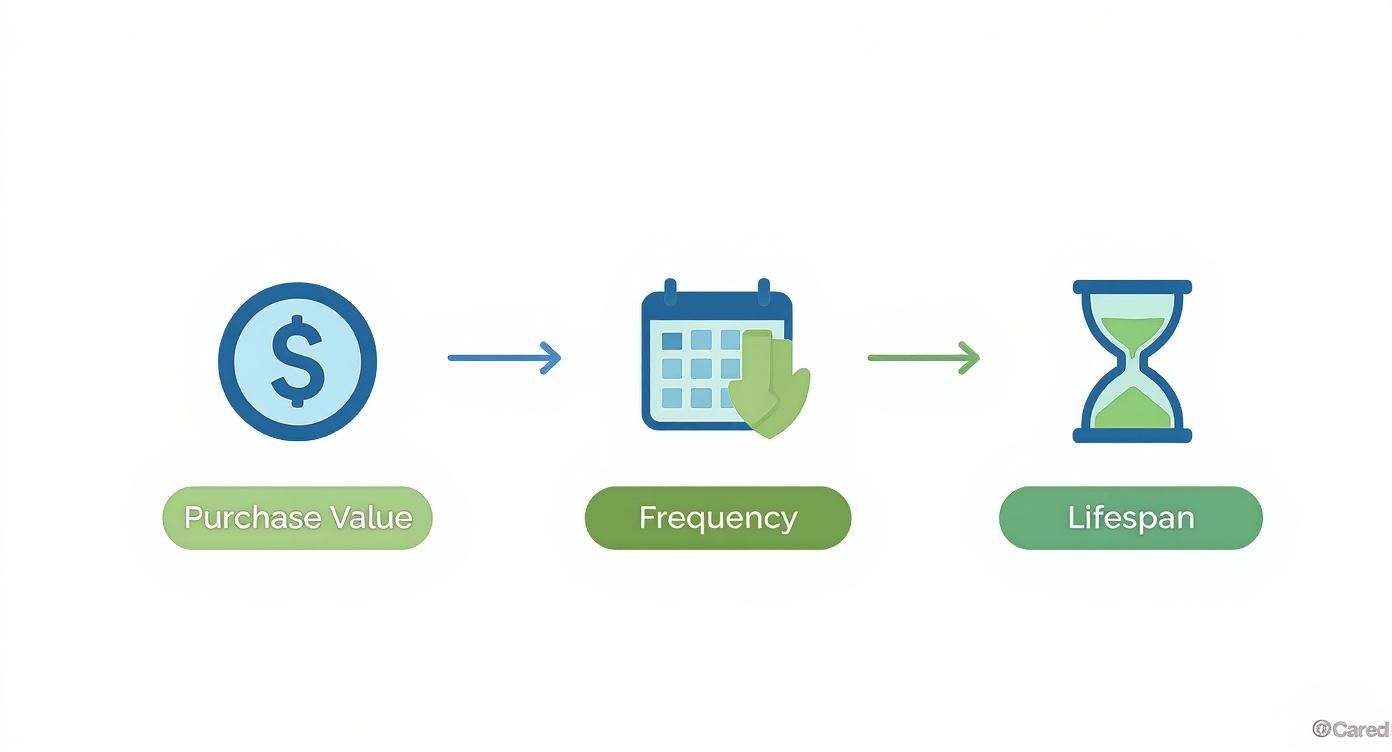
As you can see, CLV isn't one big lever you pull. It’s a combination of smaller, more manageable factors you can influence: getting customers to buy more, buy more often, and stick around for longer.
Translating Insights Into Action
With these insights in hand, you can finally stop guessing and start making data-backed decisions. You now have a clear picture of what’s working (your drivers) and what’s broken (your blockers). Turning these findings into a real strategy is where solid reporting and analytics services become indispensable, helping you connect the dots between raw numbers and profitable actions.
Key Takeaways: A CLV audit uncovers the specific customer touchpoints that have the biggest impact on long-term value. By analyzing customer cohorts, you can see how behavior and value change over time. The end goal is simple: find the positive drivers you can replicate and the negative blockers you must eliminate.
Impact Opportunity: By identifying the most powerful levers for improving CLV, you shift from being reactive to proactive. You can double down on what creates your best customers and systematically fix the friction points driving others away. The result is a much more resilient and profitable business.
Segmenting Customers For Maximum Impact
Treating your entire customer base as one uniform group is a surefire way to burn through your marketing budget. A one-size-fits-all message doesn't truly connect with anyone. The key to growth is accepting that not all customers are created equal—their needs, behaviors, and potential value vary significantly.
This is exactly where strategic segmentation comes into play. When you divide customers into distinct groups based on what they actually do, you can stop shouting into the void and start having meaningful conversations. It's about focusing your resources—your team's time, budget, and energy—where you'll see the biggest return and fundamentally start improving customer lifetime value.
Moving Beyond Basic Demographics
Demographics like industry or company size can be a decent starting point, but the real magic happens with value-based segmentation. The best models don't just look at who customers are; they focus on what customers do. One of the most powerful frameworks for this is RFM analysis.
RFM stands for:
- Recency: How recently did a customer buy from you?
- Frequency: How often do they come back?
- Monetary Value: How much are they spending?
Looking at these three variables together paints a crystal-clear, data-driven picture of who’s engaged and who’s not. It lets you instantly spot your best customers, identify those who are drifting away, and pinpoint new folks with serious potential.
Creating Actionable Customer Personas
Once you've run the RFM analysis, you can build practical personas. These aren't abstract profiles; they are actionable segments that directly inform your strategy.
Let’s walk through three common and incredibly useful examples.
1. High-Value Champions
These are your best customers. They buy often, spend big, and have purchased recently. They may only make up 5-10% of your customer base but likely drive a massive chunk of your revenue. Your job here isn't to acquire them—it's to keep them happy and make them feel seen.
- Your Strategy: Treat them like insiders. Create an exclusive VIP program, give them early access to new features, or invite them to a private community. A dedicated account manager can also work wonders. The goal is to show them they’re more than just a number on a spreadsheet.
2. At-Risk Loyalists
This group used to be great. They were frequent buyers and spent a healthy amount, but they've gone quiet. Their recency score is low, which is a red flag. They might be checking out a competitor or they've simply forgotten about you.
- Your Strategy: Don't just toss them into your regular newsletter list. Target them with a personalized "We Miss You" campaign. Personalize the offer based on their past purchases. For instance, if they used to buy a specific product every quarter, reach out with an update on that product and a compelling reason to come back.
3. New Potentials
These customers just made their first or second purchase. Their monetary and frequency scores are low, but their recency is high. You have a very small window here—the first 90 days are critical. Your mission is to guide them to their next value moment and ensure they stick around.
- Your Strategy: Enroll them in a specialized onboarding sequence immediately. Go beyond the standard thank-you email. Send them helpful content, relevant case studies, and a clear nudge toward their next logical step with you. Small, thoughtful gestures build a long-term relationship from day one.
CLV Based Customer Segmentation Strategies
| Customer Segment | Characteristics | Targeted Strategy | Key Metric |
|---|---|---|---|
| VIPs/Champions | High RFM Scores. Top 5-10% of customers driving significant revenue. Highly engaged and loyal. | Exclusive access, loyalty programs, personalized outreach from a dedicated manager, early product previews. | Retention Rate, Net Promoter Score (NPS), Referral Rate |
| Loyal Customers | Consistent purchase frequency and monetary value but not top-tier. Recency is good. | Targeted cross-sell/up-sell offers, reward programs for repeat purchases, feedback requests. | Purchase Frequency, Average Order Value (AOV) |
| At-Risk/Churning | Previously high frequency/monetary value, but low recency. Have not purchased in a while. | Personalized re-engagement campaigns ("We miss you"), special discounts, surveys to identify issues. | Win-Back Rate, Last Purchase Date |
| New Customers | High recency, but low frequency and monetary value. Made 1-2 purchases. | Structured onboarding sequence, educational content, welcome offers for a second purchase. | Second Purchase Rate, Time to Second Purchase |
| Low-Value | Low scores across all RFM metrics. Infrequent, small purchases. | Automated, low-cost marketing channels (e.g., general newsletter). Avoid high-touch, expensive efforts. | Engagement Rate (e.g., email opens/clicks) |
By digging into these segments, you can craft strategies that resonate. You stop blasting generic messages and start delivering the right value to the right person at the right time. This is the foundation of improving customer lifetime value—making people feel understood, which encourages them to stay longer and spend more.
Key Takeaways: Real segmentation is driven by behavior (like RFM analysis), not just demographics. When you tailor your communication to specific segments—like Champions, At-Risk Loyalists, and New Potentials—you invest your resources intelligently and focus retention efforts where they truly count.
Impact Opportunity: This isn't just a feel-good exercise; it directly impacts your marketing ROI. You stop wasting money trying to re-engage customers who are long gone and instead double down on the relationships with the highest potential. The result is more effective campaigns, deeper engagement, and a much healthier bottom line.
Executing High-Impact Customer Retention Programs

You've analyzed the data and identified your best customers. Now it's time to turn that analysis into action. This is where you move from insight to revenue by designing retention programs that give customers a compelling reason to stick around, spend more, and tell their friends about you.
The goal is to build a system of loyalty programs, personalized outreach, and proactive support that deepens your customer relationships.
Building a Tiered Loyalty Program That Works
A one-size-fits-all loyalty program is a recipe for mediocrity. A tiered structure, on the other hand, gives customers a clear path forward. It creates a sense of achievement and exclusivity that genuinely motivates people to climb the ladder.
Practical Example: A B2B software company could implement a tiered loyalty system:
- Bronze Tier (Entry Level): All customers get access to an exclusive monthly newsletter with pro tips and early notice on new features.
- Silver Tier (Mid-Level Spenders): In addition to Bronze perks, these customers receive a 5% discount on their annual renewal and priority support.
- Gold Tier (Top Spenders): This VIP club gets everything from lower tiers, plus a dedicated account manager, free access to premium training, and a seat at the annual customer advisory board.
The secret is making the perks genuinely valuable. A structure like this doesn't just encourage more spending; it helps you pinpoint and nurture your most important accounts—a cornerstone of improving customer lifetime value.
Crafting Personalized Communication Flows
Automation is your best friend for scaling retention, but it must feel personal. Generic email blasts are a waste of time. Instead, build automated workflows that activate based on specific customer actions or milestones.
A classic example is the "second purchase" trigger. When a customer buys a second time, they've crossed a crucial loyalty threshold. An automated email can go out immediately, thanking them and offering a small, unexpected gift—maybe free shipping on their next order or a surprise discount code. It's a small gesture that can make a huge difference in securing that third purchase. For more ideas, check out this a practical guide on improving customer retention.
The Power of Proactive Customer Check-Ins
Don't wait for a customer to submit a support ticket. By then, the damage may already be done. Proactive check-ins, especially for your high-value segments, can head off problems before they start. You can even set up automations to flag accounts with dropping engagement—a major predictor of churn. Our guide on predictive churn modelling dives deep into how to spot these at-risk customers early.
Remember, this all needs to work together across every channel. The data shows that companies mastering omnichannel engagement retain 89% of their customers, compared to just 33% for those with weak strategies. And, omnichannel customers deliver a 30% higher lifetime value. A seamless experience pays for itself.
Key Takeaways: Lasting retention is built on three pillars: loyalty programs that create aspiration, personalized communication that acknowledges customer behavior, and proactive support that solves problems before they escalate. A/B test your tactics—like comparing a points-based loyalty system to a discount-based one—to find what truly resonates with your audience.
Impact Opportunity: When you put these programs in place, you create a repeatable system for turning one-time buyers into loyal champions. This isn't just about reducing churn; it's about building a predictable revenue stream and turning your existing customer base into your most powerful engine for growth.
Using Automation And AI To Scale CLV Initiatives
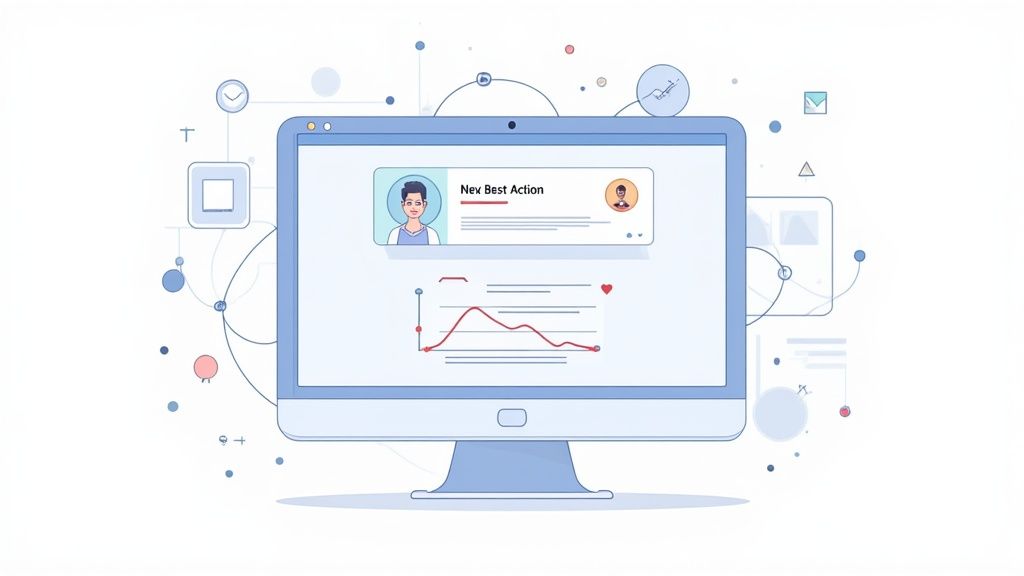
As this dashboard shows, a unified view of the customer is the foundation for any modern strategy. It's how you scale personalized experiences effectively.
Trying to manage customer lifetime value with spreadsheets and manual check-ins is a losing battle. As your business grows, the complexity of tracking individual journeys, predicting needs, and delivering timely interactions becomes impossible.
This is where technology becomes a necessity. Automation and Artificial Intelligence (AI) are the only way to deliver a high-touch, personalized experience to every customer without overwhelming your team.
Your CRM Is The Command Center
Many businesses use their Customer Relationship Management (CRM) platform like a digital rolodex—a static place to store contact info. To truly start improving customer lifetime value, you must treat your CRM as the central nervous system for the entire customer journey.
Every interaction, from the first ad click to the most recent support ticket, needs to live in the CRM. This creates a single source of truth, giving your team the context to make every conversation relevant and personal.
When your CRM is configured properly, you can:
- Trigger Smart Workflows: Automatically enroll a high-potential new customer into a white-glove onboarding sequence.
- Track Engagement Clues: Monitor product usage or content downloads to see what a customer actually cares about.
- Unify All Communication: Log every email, call, and meeting so anyone on the team can continue the conversation seamlessly.
This clean, organized data hub is the fuel for everything that comes next. Without it, any AI initiative is likely to fail.
Using AI To Go From Reactive To Predictive
While a solid CRM helps you manage the present, AI gives you a glimpse into the future. AI models analyze massive amounts of customer data to spot subtle patterns that are invisible to the human eye. This capability shifts your entire CLV strategy from reactive damage control to proactive, intelligent engagement.
Practical Example: An AI model analyzes thousands of data points—like recent dips in product usage, time between support tickets, and website browsing behavior—to generate a "churn risk" score. When a VIP customer’s score crosses a certain threshold, the system can automatically alert their account manager, enroll them in a targeted re-engagement campaign, and generate suggested talking points for a check-in call. That’s predictive automation in action.
Smart businesses are using AI right now to:
- Pinpoint the Next Best Offer: Analyze a customer's purchase history to suggest the upsell or cross-sell they're most likely to buy.
- Personalize Content at Scale: Dynamically switch out email subject lines or website banners for every user.
- Optimize Timing and Cadence: Determine the exact day and time a specific person is most likely to engage with an offer.
This is quickly becoming standard practice. By 2025, it's projected that 95% of all customer interactions will be touched by AI in some way, making responses faster and far more personal. Companies that get ahead of this see major lifts in CLV because they can forecast future value and adjust their strategies on the fly. Getting these technologies to work together effectively is a specialized skill. For teams looking to build these capabilities, an AI enablement service can provide a clear roadmap for integrating these powerful tools.
Key Takeaways: Your CRM must be the central hub for all customer data to enable effective automation. AI moves you from being reactive to proactive by predicting customer behavior, such as churn risk or the next best offer. This technology allows you to personalize experiences at a scale that is impossible to achieve manually.
Impact Opportunity: Integrating AI and automation transforms your CLV strategy from a series of manual tasks into a scalable, intelligent system. It allows you to anticipate customer needs and act on them preemptively, directly boosting retention and long-term revenue.
Burning Questions About Improving CLV
It's one thing to discuss Customer Lifetime Value in a meeting, but it's another to implement a real strategy. When you start, you will likely encounter roadblocks—budgets, team buy-in, and competing priorities.
Let's tackle the most common questions that arise once the work begins, with clear, direct answers to help you build momentum.
What Else Should I Track Besides CLV?
CLV is a fantastic north-star metric, but it’s a lagging indicator. It tells you the result of your past efforts, not what’s happening right now. To get a full, real-time pulse on customer health, you need to surround CLV with a few other key performance indicators (KPIs).
- Customer Churn Rate: This is the most direct counter-metric to CLV. It’s the percentage of customers who leave over a specific period. If your churn rate is rising, it's a clear warning that your future CLV is in trouble.
- Repeat Purchase Rate (RPR): This shows you what percentage of customers come back to buy again. A solid RPR is one of the strongest predictors of high future CLV, proving that your first-time customer experience is effective.
- Average Order Value (AOV): While CLV is about the long game, AOV is your snapshot of short-term spending. Pushing AOV up with smart upselling and cross-selling is one of the fastest ways to boost your overall lifetime value.
Practical Example: An e-commerce store notices its CLV is flat. By looking at supporting metrics, they see that while AOV is high, their Repeat Purchase Rate is extremely low. This tells them their problem isn't getting customers to spend, but getting them to come back. They can now focus their efforts on a post-purchase follow-up campaign instead of trying to increase cart size.
How Can a Small Business Start Without a Big Budget?
You do not need an enterprise-level budget or a data science team to start improving customer lifetime value. For small businesses, the key is to focus on simple, high-impact activities that don’t cost a fortune.
Here are a few practical first steps you can take today:
- Master Simple Email Automation: Start with a basic post-purchase sequence. A simple "thank you" email, a check-in a week later asking for feedback, and a follow-up a month later with a small offer can significantly improve your chances of getting a second purchase.
- Actively Collect Customer Feedback: Use free tools to send simple surveys. Ask direct questions like, "What's one thing we could do better?" or "What almost stopped you from buying?" This feedback is invaluable for fixing experience gaps that cause churn.
- Focus on Your Best Customers: Manually identify your top 10% of customers by purchase history. Then, do something that doesn’t scale. Send them a handwritten thank-you note or a personal email from the founder. This builds deep loyalty that technology can't replicate.
How Do I Get Buy-In From Leadership?
Getting leadership to invest in CLV can be challenging, especially when they are focused on short-term acquisition goals. The trick is to stop framing it as a "customer happiness" project and start talking about it as a core driver of profitability.
Walk into that meeting ready to connect the dots between your CLV strategy and the company's bottom line. Show them the math: a 5% increase in customer retention can increase profitability by anywhere from 25% to 95%. That is a number that commands attention. You’re not just asking for a budget; you’re showing them how to de-risk future revenue and build a more resilient business.
Key Takeaways: Support your CLV metric with operational KPIs like Churn Rate, Repeat Purchase Rate, and AOV to get a complete picture of customer health. Small businesses can start with low-cost tactics like email automation and direct customer feedback. To get leadership buy-in, frame CLV initiatives in terms of profitability and revenue stability, using data to show the financial impact of retention.
Impact Opportunity: The fastest way to get a "yes" from leadership is to show them the money. When they see a clear, undeniable path from your retention efforts to a healthier profit and loss statement, a CLV-focused strategy becomes an easy decision to support.
At Prometheus Agency, we help growth leaders transform their technology and strategy into scalable revenue systems. If you're ready to build a durable growth engine by improving your customer lifetime value, we can provide the roadmap. Start with a complimentary Growth Audit and AI strategy session.